Introduction
For a start, this is the situation for the case study.

Identifying one of the conflict-handling styles

Robert strongly insisted that he wants his team to get the pay raise and even threatened to get the union involved despite Kay sitting down with him and trying to give him a better alternative for issue. Through this we can see that Robert is handling the situation though a competing negotiation style.
Competing is where one party achieves its goal at the expense of others (Sourcesofinsight.com, 2019). He is trying to get what he want at the expense of Kay’s needs and trying to gain the advantage over her. This puts Kay in a difficult position, thus sacrificing their relationship. Therefore, the competing style can be determined from Robert actions.
Robert’s bargaining approach

The chart above shows the difference between distributive and integrative bargaining.
Distributive bargaining approach involves distributing shares of a fixed resource among both parties. Every party will try to get more of the share. This type of bargaining approach never have a win win outcome. (S, 2019)
Robert demonstrated a distributive bargaining approach. From the situation, there were only fixed resources, its either giving Robert and his team the pay raise or the new project with possible promotions. We can see that from Robert’s motivation, all he wants is to get the raise for his team. Lastly, he does not listen and take Kay’s solution even though the solution is better one with much benefits to both parties. This shows that he does not want the win win solution but just to have his solution to be approved.
Interpersonal communication contributing to the poor working environment?
We were not there when the incident happen, so we would not know if Robert was not actually listening to Kay’s suggestion or if Kay did not explain his solution to Robert clearly, hence the conflict.
Assume that Robert was not actively listening to Kay’s solution, one aspect of that would be his lack of active listening and the barriers to effective listening. Through this he may be just hearing what Kay have to say instead of listening and understanding what she have to say. Next the barriers in this situation may be false assumption and attitudinal factors. Since Robert is not happy, this might be the cause of attitudinal and while having that he may have false assumptions about Kay not giving him the raise he requested for.
Robert should actively listen and participate in the conversation with Kay so as both parties will understand each other and come out with a win win situation instead of a competing win lose situation.
Hall’s context model on Robert’s behaviour

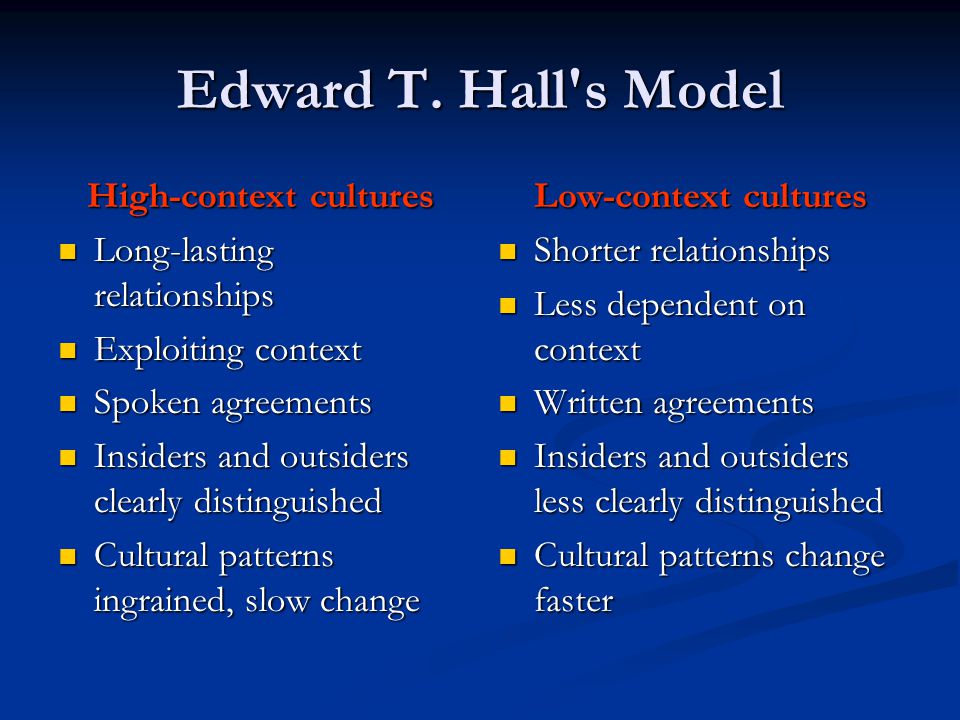
With reference to Edward T. Hall’s Model, Robert shows a low- context culture. He put more emphasis on the pay raise for his team and this shows he does not really value his relationship terms with Kay. He goes straight into the point about requesting for his raise shows that he shows less dependent on context.
Therefore through these points, he displaces a low-context culture.
Bibliography
Sourcesofinsight.com. (2019). 5 Conflict Management Styles at a Glance. [online] Available at: http://sourcesofinsight.com/conflict-management-styles-at-a-glance/ [Accessed 2 Aug. 2019].
S, S. (2019). Difference Between Distributive Negotiation and Integrative Negotiation (With Comparison Chart) – Key Differences. [online] Key Differences. Available at: https://keydifferences.com/difference-between-distributive-and-integrative-negotiation.html [Accessed 2 Aug. 2019].

 larryhofc
Hi Larry, great detailed analysis and breakdown of this case study.
I agree that due to distributing a fixed resource (company’s funds), it has led to Robert demonstrating a distributive bargaining approach which ends up in a win-lose situation in favor to Robert. Putting a stern stance on getting the pay raise for his team and threatening to pull the union in shows that he does not value his relationship with Kay depicts his low-context culture.
LikeLike
Hi Larry,
A very brief and detailed explanation regarding the conflict-management styles. Your explanation of Robert and Kay’s behavior in this scenario. The addition of pictures helps me better understand the concepts that are present in your post. Robert appeared to be stubborn and while he had the best interest in mind for his team, he was experiencing a tunnel vision on getting a monetary raise for the team and disregarded whatever Kay had to offer. I believe that in the working industry being able to have a mutual understanding and respect is important to have a successful career. Overall a really good post!
Cheers
LikeLike
Hi Larry!
I absolutely agree that Robert is handling the situation using a competing negotiaton style. This can be seen from Robert’s behaviour of insisting his demand while ignoring Kay’s argumentation. Suppose Robert listens to Kay more, both parties would end up be in a win-win scenario. Unfortunately Robert’s action will lead to both parties losing. Nevertheless it’s been a great read. Keep up the good work!
LikeLike